Credit/Debit card (ISO/IEC 7810 ID-1)

Credit/Debit card (ISO/IEC 7810 ID-1) measures 85.6mm × 54.0mm × 0.8mm. It weighs about 5.0g.
Dimensions
| Length | 85.6 mm |
|---|---|
| Width | 54.0 mm |
| Height | 0.8 mm |
| Weight | 5.0 g |
Pull a card out of your wallet and it feels like it has always been this size. That is not an accident. Every credit card, debit card, and most plastic ID cards on the planet are built to a single published specification, ISO/IEC 7810 ID-1, which fixes the card at 85.60 mm long, 53.98 mm wide, and 0.76 mm thick. Those odd-looking numbers exist so that one card shape works in every wallet, every ATM, and every card reader from Tokyo to Toronto.
This guide breaks down exactly how big a credit card is, why the dimensions are what they are, how the card compares to things you already own, and the small details (corner radius, thickness tolerance, metal-card weight) that most explanations skip.
Quick Answer: How Big Is a Credit Card?
A standard credit card measures 85.60 x 53.98 mm (3.370 x 2.125 in) and is 0.76 mm (about 1/32 in) thick. It weighs roughly 5 grams as a normal PVC card. This size is defined by the ISO/IEC 7810 “ID-1” format and is shared by debit cards, ATM cards, driver’s licenses, and most insurance and loyalty cards.
| Attribute | Metric | Imperial |
|---|---|---|
| Length | 85.60 mm | 3.370 in |
| Width (height) | 53.98 mm | 2.125 in |
| Thickness | 0.76 mm | 0.030 in |
| Corner radius | 2.88 – 3.48 mm | ~1/8 in |
| Weight (PVC) | ~5 g | ~0.18 oz |
| Diagonal | ~101.2 mm | ~3.98 in |
Credit Card Dimensions at a Glance
- Length: 85.60 mm / 8.56 cm / 3.370 in
- Width: 53.98 mm / 5.398 cm / 2.125 in
- Thickness: 0.76 mm nominal, allowed range roughly 0.68 – 0.84 mm
- Corner radius: about 3.18 mm (1/8 in), within a 2.88 – 3.48 mm tolerance
- Aspect ratio: 1.586:1 (very close to the golden ratio, 1.618:1)
- Face area: about 46.2 cm2 (7.16 in2)
- Weight: ~5 g for standard PVC; 12 – 22 g for metal cards
- Standard: ISO/IEC 7810, format ID-1 (also called CR80 in the card-printing industry)
What Does a Credit Card Look Like in Size?
Hold a credit card flat in your palm and it covers roughly the area from the base of your fingers to your first knuckles. It is a little wider than three fingers held together and about as long as an adult thumb plus index finger spread into an “L”.
Stand it on its long edge and it is only three-quarters of a millimetre thick, thinner than a stack of eight sheets of printer paper. That thinness is why a wallet with ten cards is still slim: ten PVC cards stacked measure about 7.6 mm, less than the width of a standard pencil.
The proportions are the part people feel without noticing. The 1.586:1 ratio of length to width sits almost exactly on the golden ratio, which is one reason the shape looks “right” no matter which way you turn it.
6 Everyday Comparisons That Help You Picture a Credit Card
- A US business card measures 88.9 x 50.8 mm. A credit card is 3.3 mm shorter but 3.2 mm taller, so the two overlap almost perfectly if you lay one on the other.
- A standard SIM card holder is the same ID-1 size before you snap out the SIM. The SIM punch-out sits in a card the exact size of your credit card.
- A folded US dollar bill: a dollar bill is 156 mm long. Fold it in half and it is 78 mm, just shorter than a credit card’s long side.
- An iPhone 15 is 147.6 mm tall and 71.6 mm wide. A credit card is a little longer than half the phone’s height and fits easily across its width.
- A playing card (poker size) is 63.5 x 88.9 mm. Rotate it and it is within a few millimetres of a credit card, just slightly taller and narrower.
- Three credit cards side by side span about 162 mm, roughly the length of a new, unsharpened pencil (190 mm) minus the eraser.
Credit Card Size in Different Units
| Unit | Length | Width | Thickness |
|---|---|---|---|
| Millimetres | 85.60 | 53.98 | 0.76 |
| Centimetres | 8.56 | 5.398 | 0.076 |
| Inches | 3.370 | 2.125 | 0.030 |
| Points (print) | 242.6 | 153.0 | 2.16 |
| Pixels at 300 DPI | 1011 | 638 | 9 |
The card-printing industry usually quotes the ID-1 card as 3.375 x 2.125 in or the rounded CR80 size. The 0.005 in difference from the ISO figure is just rounding; the physical card is the same.
How Much Does a Credit Card Weigh?
A normal PVC credit or debit card weighs about 5 grams. You can feel the difference with premium products:
| Card type | Typical weight |
|---|---|
| Standard PVC card | 5 g |
| Thicker “premium” PVC | 6 – 7 g |
| Metal-core hybrid card | 12 – 16 g |
| Full metal card (e.g. stainless) | 17 – 22 g |
Metal cards keep the exact same 85.60 x 53.98 mm footprint and 0.76 mm thickness, so they still work in every reader. All the extra mass comes from the material, which is why a metal card feels three to four times heavier than the plastic one next to it.
What the ISO/IEC 7810 Standard Actually Controls
ID-1 is one of four card formats in the same family:
| Format | Size (mm) | Common use |
|---|---|---|
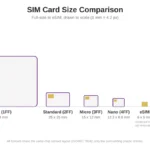
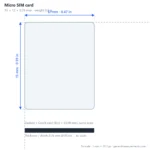
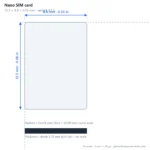
| ID-000 | 25 x 15 | SIM card |
| ID-1 | 85.60 x 53.98 | Credit, debit, ATM, driver’s license, most ID cards |
| ID-2 | 105 x 74 | Older national ID cards, visa stickers |
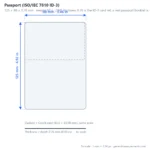
| ID-3 | 125 x 88 | Passport data page |
Beyond the outline, related standards fix where the working parts sit: ISO/IEC 7811 places the magnetic stripe and any embossed characters, and ISO/IEC 7816 places the EMV chip contacts. That is why a card issued by a bank in one country still lines up with a terminal built by a manufacturer in another.
Does Credit Card Size Ever Vary?
For the card outline, effectively no. Every Visa, Mastercard, American Express, and Discover card is ID-1. What does vary:
- Thickness within tolerance: cards can legally run from about 0.68 to 0.84 mm. You will not notice, but a reader is built to accept the whole range.
- Corner radius: the standard allows 2.88 – 3.48 mm. Cheaper cards sit at the tighter end; some premium cards use the rounder corner.
- Cut-out and mini cards: novelty “mini” cards and key-fob cards exist, but they are companion tokens, not the primary card, and many terminals will not read them.
- Vertical vs horizontal artwork: more banks now print the card art vertically. The card is still the same physical ID-1 rectangle, just rotated in the design.
Common Mistakes When Comparing Credit Card Dimensions
- Mixing up length and width. The card is 85.60 mm on its long side and 53.98 mm on its short side. Some sources swap these or call the short side “height”.
- Reconverting rounded numbers. ISO gives both 85.60 mm and 3.370 in as valid, but they are each rounded from the design. Converting 3.375 in back to millimetres gives 85.73 mm, which is not the spec. Pick one unit system and stay in it.
- Assuming thickness is exact. 0.76 mm is nominal, not fixed. Real cards vary by up to about 0.08 mm either way.
- Treating a business card as identical. A US business card is 88.9 x 50.8 mm. It is close, but 3.3 mm longer and 3.2 mm narrower, so it will not sit flush in a card slot.
- Forgetting driver’s licenses are the same size. People often measure a license expecting something different. It is ID-1, exactly like a credit card.
Frequently Asked Questions
How big is a credit card in inches?
3.370 x 2.125 in, and about 0.030 in (1/32 in) thick.
How big is a credit card in cm?
8.56 cm long by 5.398 cm wide, and 0.076 cm thick.
Are all credit cards the same size?
Yes. Every mainstream credit and debit card follows ISO/IEC 7810 ID-1, so they share the same 85.60 x 53.98 mm outline and 0.76 mm thickness.
Is a debit card the same size as a credit card?
Identical. Debit cards, ATM cards, and gift cards all use the ID-1 format.
Is a driver’s license the same size as a credit card?
In most countries, yes. Driver’s licenses and most photo ID cards are ID-1, the same size as a credit card.
Why is a credit card that specific size?
So a single card works everywhere. Standardising the outline, thickness, stripe position, and chip position lets any card work in any ATM or terminal worldwide.
How thick is a stack of credit cards?
About 0.76 mm each, so five cards are roughly 3.8 mm and ten cards about 7.6 mm, still thinner than a pencil.
How much does a credit card weigh?
Around 5 g for a standard plastic card. Metal cards weigh 12 – 22 g at the same size.
Final Takeaway
A credit card is 85.60 x 53.98 mm and 0.76 mm thick, weighs about 5 grams, and has followed the ISO/IEC 7810 ID-1 standard for decades. That single specification is why the card in your pocket fits every wallet, reader, and ATM you will ever use, and why a driver’s license, a hotel key card, and a metro pass all feel the same in your hand.
Similar in Size
More Cards & IDs

Frequently Asked Questions
How long is a Credit/Debit card (ISO/IEC 7810 ID-1)?
A Credit/Debit card (ISO/IEC 7810 ID-1) is 85.6mm (8.6cm) long.
How tall is a Credit/Debit card (ISO/IEC 7810 ID-1)?
A Credit/Debit card (ISO/IEC 7810 ID-1) is 0.8mm (0.1cm) tall.
How much does a Credit/Debit card (ISO/IEC 7810 ID-1) weigh?
A Credit/Debit card (ISO/IEC 7810 ID-1) weighs about 5.0g.